Surface preparation has evolved significantly over the past decades, with traditional methods giving way to more advanced and efficient technologies. Among these innovations, laser cleaning has emerged as the most effective solution for removing contaminants, coatings, and oxidation from various materials. This revolutionary technology offers unparalleled precision, environmental benefits, and cost-effectiveness that make it the preferred choice for industries ranging from aerospace to automotive manufacturing.
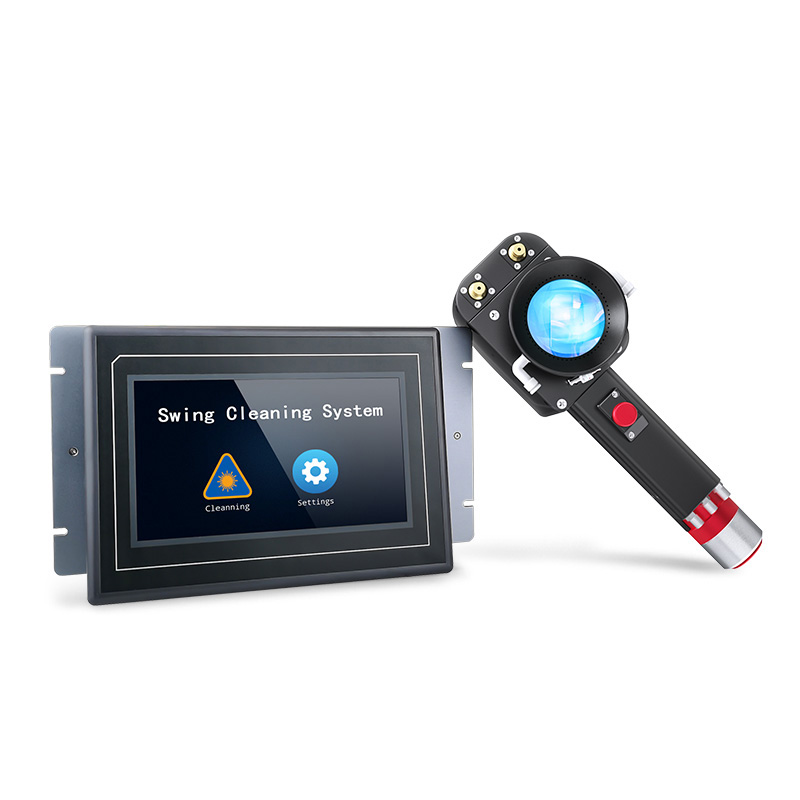
The fundamental principle behind laser cleaning involves the use of high-intensity laser beams to ablate unwanted materials from surfaces without damaging the underlying substrate. This process occurs through photochemical and photothermal reactions that break the molecular bonds of contaminants, causing them to vaporize or be expelled from the surface. Unlike conventional methods that rely on abrasives or chemicals, laser cleaning provides a non-contact solution that eliminates the need for secondary waste disposal and reduces operational costs.
The effectiveness of laser cleaning stems from its ability to transfer photonic energy directly to target materials. When a laser beam hits a contaminated surface, the energy is absorbed by the unwanted layer, causing rapid heating and expansion. This thermal shock creates a pressure wave that separates the contaminant from the substrate. The wavelength, pulse duration, and power density can be precisely controlled to optimize removal efficiency while preserving the base material integrity.
Modern laser cleaning systems utilize various wavelengths depending on the application requirements. Infrared lasers are particularly effective for removing organic contaminants and paint coatings, while ultraviolet lasers excel at precision cleaning of delicate electronic components. The selective absorption characteristics of different materials allow operators to fine-tune the process parameters for optimal results across diverse surface preparation applications.
Contemporary laser cleaning equipment features sophisticated pulse control systems that regulate energy delivery with microsecond precision. Short pulse durations minimize heat transfer to the substrate, preventing thermal damage while maximizing cleaning efficiency. Beam shaping optics ensure uniform energy distribution across the treatment area, eliminating hot spots that could compromise surface quality.
The integration of real-time monitoring systems allows for adaptive process control, automatically adjusting parameters based on surface conditions and cleaning progress. This intelligent feedback mechanism ensures consistent results across varying material types and contamination levels, making laser cleaning systems highly reliable for industrial applications requiring strict quality standards.
One of the most compelling advantages of laser cleaning technology is its environmental neutrality. Traditional surface preparation methods often rely on harsh chemicals that generate hazardous waste streams requiring specialized disposal procedures. Laser cleaning eliminates this concern entirely by producing only small amounts of particulate matter that can be easily captured using standard filtration systems.
The absence of chemical solvents not only reduces environmental impact but also eliminates health risks associated with exposure to toxic substances. Workers no longer need to handle corrosive materials or work in environments with chemical vapors, significantly improving workplace safety conditions. This benefit becomes particularly important in enclosed spaces where ventilation may be limited.
Conventional cleaning methods often introduce secondary contaminants such as abrasive residue or chemical residues that require additional cleaning steps. Laser cleaning produces a pristine surface free from any foreign materials, eliminating the need for subsequent washing or rinsing operations. This characteristic is especially valuable in applications where surface purity is critical, such as semiconductor manufacturing or medical device production.
The precision of laser cleaning also prevents over-processing that can occur with mechanical methods. Operators can remove specific layers while leaving underlying materials completely intact, preserving surface textures and dimensional tolerances that might be compromised by aggressive mechanical cleaning techniques.
While the initial investment in laser cleaning equipment may be higher than traditional methods, the long-term economic benefits are substantial. The elimination of consumable materials such as abrasives, solvents, and replacement media significantly reduces ongoing operational costs. Additionally, the automated nature of laser cleaning systems minimizes labor requirements, allowing operators to manage multiple processes simultaneously.
Maintenance requirements for laser cleaning systems are minimal compared to mechanical alternatives. There are no wearing parts that require frequent replacement, and the non-contact nature of the process prevents equipment degradation from abrasive materials. This reliability translates to higher uptime and reduced maintenance expenses over the equipment lifecycle.
Modern laser cleaning systems can process large areas rapidly, often exceeding the speed of conventional methods by significant margins. The ability to automate the cleaning process through robotic integration further increases throughput while maintaining consistent quality standards. This efficiency gain becomes particularly valuable in high-volume manufacturing environments where processing time directly impacts profitability.
The instantaneous nature of laser cleaning eliminates drying times associated with solvent-based methods, allowing for immediate downstream processing. This capability reduces work-in-progress inventory and accelerates overall production cycles, providing manufacturers with improved flexibility in meeting delivery schedules.
The aerospace industry has embraced laser cleaning technology for its ability to remove coatings and contaminants from critical components without affecting dimensional tolerances. Engine components, structural elements, and electronic assemblies benefit from the precision cleaning capabilities that ensure optimal performance and reliability. The non-abrasive nature of laser cleaning prevents micro-damage that could lead to stress concentration points and premature failure.
Military applications particularly value the portability of modern laser cleaning systems, which can be deployed in field conditions for equipment maintenance and refurbishment. The elimination of chemical disposal requirements simplifies logistics and reduces environmental compliance concerns in remote locations.
Automotive manufacturers utilize laser cleaning for preparing surfaces before welding, painting, and bonding operations. The technology excels at removing mill scale, rust, and oil residues from steel components, ensuring optimal adhesion for subsequent processes. The precision control available with laser cleaning systems allows for selective removal of specific layers while preserving protective coatings in adjacent areas.
The integration of laser cleaning into automated production lines has proven particularly beneficial for high-volume automotive applications. Robotic systems can be programmed to follow complex part geometries, ensuring complete surface preparation even on intricate components with multiple angles and recesses.
Contemporary laser cleaning systems operate across a wide range of power levels, from compact units suitable for small-scale applications to high-power industrial systems capable of processing large components. The energy efficiency of laser cleaning compares favorably to traditional methods when total process energy consumption is considered, including the energy required for waste treatment and disposal.
Advanced power management systems optimize energy delivery based on real-time feedback, ensuring that only the minimum energy required for effective cleaning is applied. This intelligent control reduces operating costs while extending equipment life by preventing unnecessary thermal stress on system components.
Laser cleaning produces surfaces with exceptional cleanliness levels that meet or exceed the most stringent industry standards. The process can be calibrated to achieve specific surface roughness values, making it suitable for applications ranging from mirror-like finishes to textured surfaces that enhance adhesion for subsequent coatings.
The consistency of laser cleaning results eliminates the variability often associated with manual preparation methods. Each treated area receives identical energy exposure, ensuring uniform surface characteristics across the entire workpiece. This repeatability is essential for quality-critical applications where surface preparation variations could affect product performance.
The next generation of laser cleaning systems incorporates artificial intelligence algorithms that can identify contamination types and optimize cleaning parameters automatically. Machine learning capabilities allow these systems to improve performance over time by analyzing successful cleaning cycles and adjusting process variables accordingly.
Predictive maintenance features utilize sensor data to anticipate component wear and schedule maintenance activities proactively. This capability minimizes unplanned downtime and ensures consistent performance throughout the equipment lifecycle.
Ongoing miniaturization efforts are producing increasingly portable laser cleaning systems that maintain industrial-grade performance capabilities. These compact units expand the range of applications where laser cleaning can be economically implemented, including field service operations and small-scale manufacturing facilities.
User interface improvements are making laser cleaning technology more accessible to operators without specialized training. Intuitive control systems with pre-programmed settings for common applications reduce setup time and minimize the potential for operating errors.
Laser cleaning is effective on virtually all metallic surfaces including steel, aluminum, titanium, and copper alloys. It also works well on composites, ceramics, and stone materials. The key is matching the laser parameters to the specific material properties and contamination type to achieve optimal results without damaging the substrate.
Laser cleaning provides superior surface preparation quality compared to sandblasting because it removes only the unwanted material without creating the micro-scratches or surface roughening that abrasive methods produce. This results in better adhesion for coatings and eliminates the need for post-cleaning surface smoothing operations.
Laser cleaning requires proper eye protection with appropriate wavelength-specific safety glasses, adequate ventilation to remove any particulate matter generated during the process, and operator training on laser safety protocols. Most modern systems include safety interlocks and automatic shutdown features to prevent accidental exposure.
Yes, laser cleaning systems are designed for easy integration into automated production environments. They can be mounted on robotic arms, incorporated into conveyor systems, or operated as standalone stations depending on the specific application requirements. The compact design and flexible beam delivery options make integration straightforward for most manufacturing configurations.
 Hot News
2026-04-02
2026-04-09
2026-04-08
2026-04-06
2026-04-02
2026-03-31

6th Floor, Block B, Wanhe Technology Building, No. 7 Huitong Road, Guangming District, Shenzhen ,Guangdong Province
Copyright © 2026 Shenzhen Zbtk Technology Co., Ltd. Privacy policy
 EN
EN
![8.5mm High precision galvo scanner ZB2D8AH-Pro-[FB]](https://shopcdnalpha.grainajz.com/category/72164/1455/c0c607c035e8f91c0b652b19f6c5e433/%E4%B8%BB%E5%9B%BE%E8%A7%84%E8%8C%831.jpg)