Modern manufacturing industries demand increasingly precise joining methods that can deliver consistent, high-quality results across diverse materials and applications. Traditional welding techniques, while effective for many scenarios, often fall short when extreme precision, minimal heat-affected zones, and superior joint quality are required. This has led to the widespread adoption of advanced joining technologies that can meet the stringent requirements of contemporary precision manufacturing environments.
Among the various joining technologies available today, laser welding has emerged as the preferred choice for precision applications across multiple industries. From aerospace components requiring exceptional strength-to-weight ratios to medical devices demanding biocompatibility and sterile joints, laser welding provides unmatched control over the welding process. The technology's ability to create precise, clean welds with minimal thermal distortion makes it indispensable for applications where traditional methods simply cannot deliver the required quality standards.
Laser welding operates on the principle of concentrated photon energy conversion, where a highly focused beam of coherent light is directed onto the workpiece surface. When the laser beam contacts the material, photons transfer their energy to the metal atoms, causing rapid heating that exceeds the material's melting point within microseconds. This controlled energy transfer creates a localized molten pool that fuses the materials together as the beam moves along the predetermined weld path.
The wavelength of the laser beam plays a crucial role in determining absorption efficiency across different materials. Near-infrared wavelengths, commonly used in industrial laser welding systems, provide optimal absorption characteristics for most metals, including steel, aluminum, and titanium alloys. The focused nature of the laser beam allows for energy densities exceeding 10^6 watts per square centimeter, enabling precise control over the weld penetration depth and width.
At higher power densities, laser welding creates a phenomenon known as keyhole welding, where the intense energy vaporizes material at the beam focal point, creating a cavity filled with metal vapor and plasma. This keyhole effect enables deep penetration welding, allowing single-pass joins through materials several millimeters thick. The keyhole's walls absorb additional laser energy through multiple reflections, significantly increasing welding efficiency and penetration depth compared to conduction-mode welding.
The stability of the keyhole formation directly influences weld quality, making process parameter optimization critical for achieving consistent results. Factors such as laser power, beam focus position, welding speed, and shielding gas composition must be carefully balanced to maintain stable keyhole dynamics throughout the welding process. Advanced laser welding systems incorporate real-time monitoring and feedback control to ensure optimal keyhole stability across varying material thicknesses and joint configurations.
One of the most significant advantages of laser welding in precision applications is its ability to minimize the heat-affected zone surrounding the weld joint. Traditional arc welding methods distribute heat over relatively large areas, causing thermal distortion, grain structure changes, and residual stresses that can compromise component performance. Laser welding concentrates energy precisely at the joint location, resulting in HAZ widths typically measuring less than 0.5 millimeters for thin materials.
This precise heat control becomes particularly important when welding heat-sensitive materials or components with tight dimensional tolerances. Electronic housings, precision mechanical assemblies, and medical implants all benefit from laser welding's ability to join materials without causing thermal damage to adjacent areas. The reduced thermal input also minimizes metallurgical changes in the base material, preserving the original mechanical properties and microstructure characteristics.
Laser welding produces joints with exceptional mechanical properties due to the rapid heating and cooling cycles inherent in the process. The high cooling rates, often exceeding 10,000 degrees Celsius per second, result in fine-grained weld metal with superior strength characteristics compared to conventional welding methods. This refined microstructure translates to improved fatigue resistance, higher tensile strength, and better corrosion resistance in many applications.
The absence of filler material in many laser welding applications eliminates potential contamination sources and ensures chemical composition consistency throughout the joint. Autogenous laser welding, where only the base materials are melted and fused, maintains the original alloy composition and properties. When filler materials are required, precise wire feeding systems can deliver controlled amounts of additive material, enabling property tailoring for specific application requirements.
Laser welding demonstrates remarkable versatility across diverse metallic materials, from common structural steels to exotic superalloys used in aerospace applications. Stainless steels respond particularly well to laser welding, with the rapid heating and cooling cycles helping to maintain corrosion resistance by minimizing carbide precipitation and preserving the chromium-rich passive layer. Aluminum alloys, traditionally challenging for fusion welding due to their high thermal conductivity and reflectivity, can be successfully joined using appropriate laser wavelengths and process parameters.
Titanium and its alloys benefit significantly from laser welding's controlled atmosphere capabilities and minimal heat input. The process can be performed in protective gas environments or even vacuum chambers, preventing contamination that could compromise the material's biocompatibility or mechanical properties. Nickel-based superalloys, copper alloys, and even dissimilar material combinations can be successfully joined using optimized laser welding parameters and appropriate joint designs.
The semiconductor and electronics industries have embraced laser welding for joining advanced materials such as kovar, invar, and specialized copper alloys used in electronic packaging applications. These materials often require hermetic sealing capabilities and exceptional joint reliability, making laser welding's precision and consistency essential for product success. The process enables welding of extremely thin materials, with successful joints demonstrated on foils less than 25 micrometers thick.
Composite materials and hybrid structures present new opportunities for laser welding applications, particularly in automotive and aerospace industries seeking weight reduction and performance optimization. Metal matrix composites, fiber-reinforced plastics with metallic inserts, and layered material systems can be joined using carefully controlled laser parameters that minimize damage to reinforcing fibers while achieving strong metallurgical bonds between metallic components.
The automotive industry has extensively adopted laser welding for manufacturing critical components requiring high strength, dimensional accuracy, and aesthetic appeal. Body-in-white construction utilizes laser welding for joining steel and aluminum panels, creating smooth, continuous joints that eliminate the need for additional finishing operations. The process enables manufacturers to achieve Class A surface quality directly from the welding operation, reducing production time and costs while improving overall vehicle appearance.
Transmission components, engine parts, and safety-critical assemblies benefit from laser welding's ability to create strong, reliable joints in complex geometries. Gear assemblies, valve components, and fuel injection system parts require precise dimensional control and superior joint strength that only laser welding can consistently deliver. The automotive industry's push toward electric vehicles has created new applications for laser welding in battery pack assembly, where hermetic sealing and electrical conductivity requirements make traditional joining methods inadequate.
Medical device manufacturing represents one of the most demanding applications for laser welding technology, where biocompatibility, sterility, and reliability are paramount concerns. Surgical instruments, implantable devices, and diagnostic equipment components require joints that can withstand sterilization processes while maintaining structural integrity throughout their service life. Laser welding's ability to create clean, contamination-free joints without flux or filler materials makes it ideal for medical applications.
Pacemaker housings, orthopedic implants, and minimally invasive surgical tools all rely on laser welding for critical joint integrity. The process enables welding of biocompatible materials such as titanium, stainless steel, and specialized alloys while maintaining their corrosion resistance and biocompatibility characteristics. Micro-welding capabilities allow for joining components with dimensions measured in micrometers, enabling the production of increasingly sophisticated medical devices with enhanced functionality and patient safety.
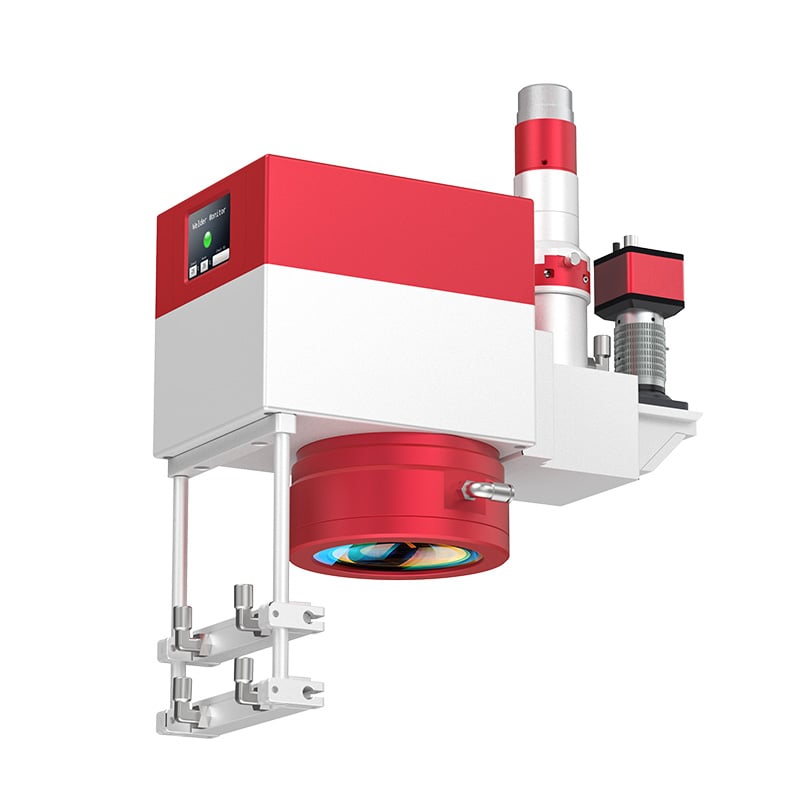
Modern laser welding systems incorporate sophisticated monitoring technologies that provide real-time feedback on process conditions and joint quality. Optical sensors can detect variations in keyhole formation, plasma characteristics, and weld pool dynamics, enabling immediate process adjustments to maintain consistent quality. Coaxial monitoring systems observe the welding process through the same optical path as the laser beam, providing accurate information about joint formation without interference from external factors.
Acoustic monitoring techniques detect subtle changes in the welding process by analyzing sound signatures generated during material interaction with the laser beam. These systems can identify process anomalies such as incomplete penetration, porosity formation, or joint fit-up issues in real-time, allowing for immediate corrective action. Integration with automated quality control systems enables 100% inspection capabilities, ensuring that every weld meets specified quality standards before components proceed to subsequent manufacturing operations.
Quality assurance in laser welding applications requires comprehensive statistical process control methodologies that track key process parameters and joint characteristics over time. Control charts monitoring laser power stability, beam positioning accuracy, and welding speed consistency help identify trends that could indicate equipment degradation or process drift. Regular sampling and destructive testing of representative joints provide validation of process capability and long-term stability.
Documentation systems capture complete process traceability, recording all relevant parameters for each weld joint produced. This information becomes crucial for quality investigations, process optimization efforts, and regulatory compliance requirements common in aerospace and medical device manufacturing. Advanced data analytics can identify correlations between process parameters and joint properties, enabling predictive maintenance strategies and continuous process improvement initiatives.
The integration of artificial intelligence and machine learning technologies with laser welding systems represents a significant advancement in process optimization and quality control capabilities. AI algorithms can analyze vast amounts of process data to identify optimal parameter combinations for specific material and joint configurations, reducing setup time and improving first-pass yield rates. Machine learning models trained on historical process data can predict potential quality issues before they occur, enabling proactive process adjustments.
Computer vision systems powered by deep learning algorithms can perform real-time joint quality assessment with accuracy exceeding human visual inspection capabilities. These systems can detect subtle defects, dimensional variations, and surface irregularities that might indicate process problems or equipment issues. The continuous learning capability of AI systems means that quality assessment accuracy improves over time as more data becomes available for analysis and model refinement.
Emerging laser technologies focus on advanced beam shaping capabilities that enable even greater control over energy distribution and weld joint characteristics. Multi-spot laser systems can simultaneously process multiple joints or create complex weld patterns with improved efficiency and consistency. Beam oscillation techniques distribute laser energy over wider areas while maintaining high power density, enabling improved gap bridging capabilities and reduced sensitivity to joint fit-up variations.
Ultrafast laser systems operating with pulse durations measured in femtoseconds or picoseconds offer new possibilities for precision welding of materials previously considered unweldable. These systems can achieve material removal and joining with minimal thermal effects, opening new applications in microelectronics, photonics, and advanced material processing. The development of more efficient laser sources and improved beam delivery systems continues to expand the range of applications where laser welding provides optimal results.
Laser welding achieves superior precision through highly concentrated energy delivery that creates minimal heat-affected zones, typically less than 0.5mm wide. The focused laser beam allows for exact control over weld penetration depth and width, while rapid heating and cooling cycles preserve material properties and minimize thermal distortion. This precision is impossible to achieve with traditional arc welding methods that distribute heat over much larger areas.
Yes, laser welding can successfully join many dissimilar material combinations by carefully controlling process parameters and joint design. The precise energy control allows welders to manage different melting points, thermal expansion coefficients, and metallurgical compatibility issues. Common successful combinations include stainless steel to carbon steel, aluminum to steel with transition materials, and various copper alloys to different base metals used in electronic applications.
The primary limitations include high initial equipment costs, requirements for precise joint fit-up and cleanliness, and material thickness restrictions for single-pass welding. Highly reflective materials like copper and aluminum can be challenging at certain wavelengths, requiring specialized laser types or surface preparation. The process also requires skilled operators and sophisticated safety systems due to the high-power laser radiation involved in industrial applications.
Laser welding enhances product reliability through consistent joint quality, minimal contamination risk, and superior mechanical properties resulting from refined weld metal microstructure. The process eliminates many variables present in traditional welding, such as electrode consumption, slag formation, and operator technique variations. Real-time monitoring capabilities enable immediate detection and correction of process deviations, ensuring every weld meets specified quality standards for critical applications.
 Hot News
2026-04-02
2026-04-09
2026-04-08
2026-04-06
2026-04-02
2026-03-31

6th Floor, Block B, Wanhe Technology Building, No. 7 Huitong Road, Guangming District, Shenzhen ,Guangdong Province
Copyright © 2026 Shenzhen Zbtk Technology Co., Ltd. Privacy policy
 EN
EN
![14mm High precision galvo scanner ZB2D14AW-III-Max-[FB]](https://shopcdnalpha.grainajz.com/1455/upload/product/f00087390108d038db84295e4308f6f767f2f36a20d8a894683aefa94253901e.jpg)
![10mm High precision galvo scanner ZB2D10A-Pro-[FB]](https://shopcdnalpha.grainajz.com/category/72164/1455/65f10861a84c8d74f16d83a84a90504b/%E4%B8%BB%E5%9B%BE%E8%A7%84%E8%8C%831.jpg)